RISE
The digital tools of the ZEvRA project enable the shift from traditional linear vehicle manufacturing to a harmonised, data driven circular approach. Its purpose is to build and integrate advanced digital tools that enhance material circularity, accelerate design workflows, and strengthen traceability across the automotive value chain. These tools serve as enablers for the Design for Circularity methodology and the material innovations, ultimately ensuring that circularity is quantifiable, comparable, and scalable across Europe’s electric vehicle ecosystem. Five groups of tools are being developed, three supporting components of different material groups and two more supporting circularity across the vehicle as a whole.
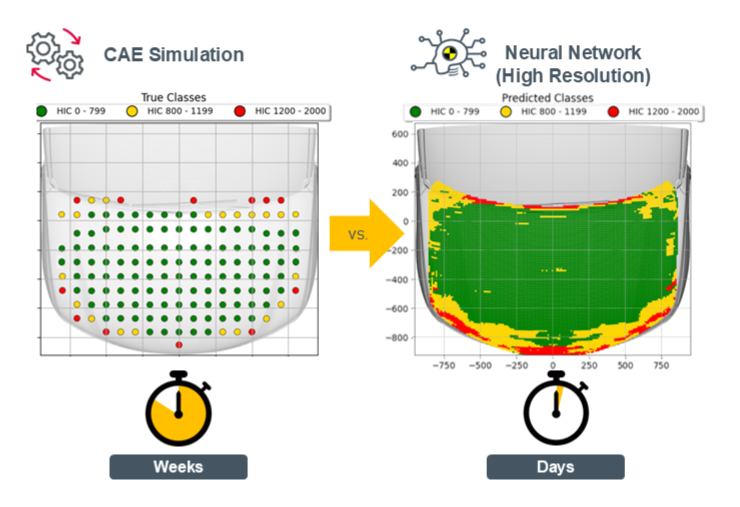
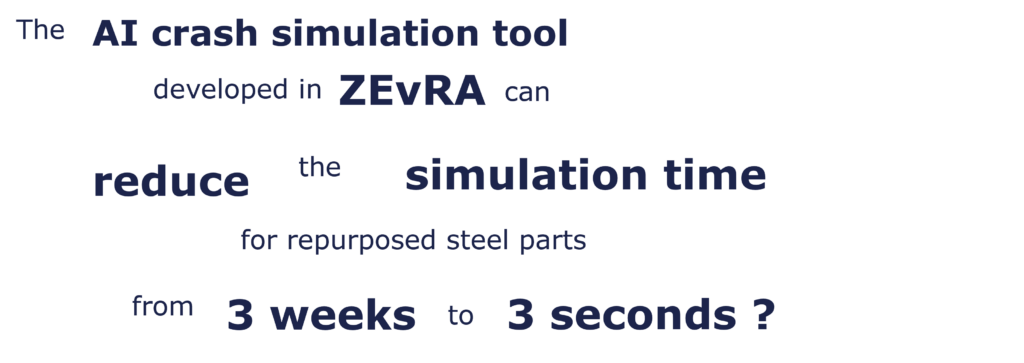
For steel repurposing, an AI tool is developed that allows the rapid assessment of a repurposed steel to determine whether it can be used for components that have pedestrian safety requirements. This can be done using conventional simulation, but with the newly developed tool, crash simulation time is reduced from six weeks to just seconds, enabling rapid redesign of repurposed components while maintaining safety requirements.
For fibrereinforced plastics and recycled polymers, the tools provide virtual twin models capable of simulating the performance of the recycled material in both processing and component performance. The underlying developments are in prediction of crystallinity and material models for recycled materials. This allows the comparison of fibre orientation, weld lines, and warpage in recycled compared to virgin plastics, important for evaluating the feasibility of high recycled content.
The last of the material specific tools is for recycled aluminium. These are new analytical correlation models for recycled aluminium alloys that link microstructure, process parameters, and crash performance and through this allow extrusion and casting processes to be virtually optimised before physical prototyping. The resulting models show highly accurate predictions of crystallinity and performance, increasing the confidence in designing and using these recycled aluminium alloys.
Looking beyond component design, a tool for the automation of the Life Cycle Thinking assessment is developed thus digitalising circularity decision making. Here designers gain a tool that evaluates R9 strategies, logistics, assembly, and environmental trade offs in real time. This systematized digital assessment helps identify the most effective circular pathways while ensuring consistency and transparency across different materials and applications.
The final tool in the suite is the creation of an automotive specific Digital Product Passport (DPP). By defining life cycle data and enabling secure data sharing test benches, the DPP prototype demonstrates how material origin, processing history, and recyclability can be tracked throughout the value chain.
Together, these digital tools unlock ZEvRA’s ambition: faster engineering cycles, more reliable use of secondary materials, transparent value chain data exchange, and a replicable foundation for Europe’s circular electric vehicles of the future.
EDAG
The ZEvRA project is pioneering the use of artificial intelligence to advance circularity and sustainability in electric vehicle (EV) manufacturing. A great example of how AI can improve engineering and circularity is EDAG’s AI HIC tool. This digital application is designed to revolutionize how automotive manufacturers assess and reuse sheet metal parts, particularly steel, in vehicle design.
The AI HIC tool addresses a critical challenge in automotive circularity: determining whether hoods are well designed to ensure a high survival rate at pedestrian crashes. This is particularly important to ensure that sheet metal components to be repurposed in new vehicle models. Traditionally, this process requires extensive manual analysis and simulation in the range of weeks, making reuse economically and technically unfeasible. EDAG’s solution leverages artificial intelligence to automate and accelerate this assessment, making sustainable practices more accessible to manufacturers.
At its core, the tool processes data from Computer-Aided Design (CAD), preparing geometry and material information for AI-driven analysis. Using advanced machine learning models, the tool classifies sheet metal parts according to Head Impact Criteria (HIC), a key safety metric for pedestrian protection. Instead of outputting a single HIC value, the AI assigns values to any predefined point providing rapid feedback on its suitability for reuse in the vehicle’s frontal area with an unreached resolution.
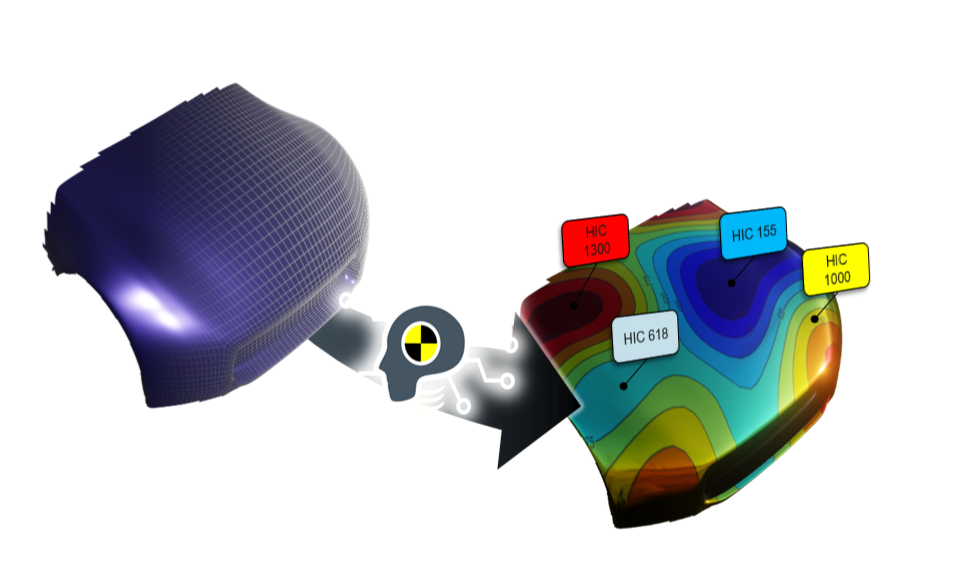
The workflow is streamlined and user-friendly. Engineers can import CAD or CAE files, assign material properties, and let the AI process the data. The tool’s analysis features allow users to visualize impact points, compare AI predictions with simulation results, and export findings for further evaluation. Fine-tuning capabilities enable adaptation of the AI model to specific vehicle types or new datasets, ensuring flexibility as design requirements evolve.
By enabling fast, reliable assessment of reused sheet metal parts, EDAG’s AI HIC tool supports the automotive industry’s transition to circularity. It reduces waste, lowers costs, and helps manufacturers meet stringent safety standards while advancing the broader goals of zero-emission mobility. As the ZEvRA Project continues, this tool sets a new benchmark for sustainable innovation in automotive engineering.

Fundació Eurecat
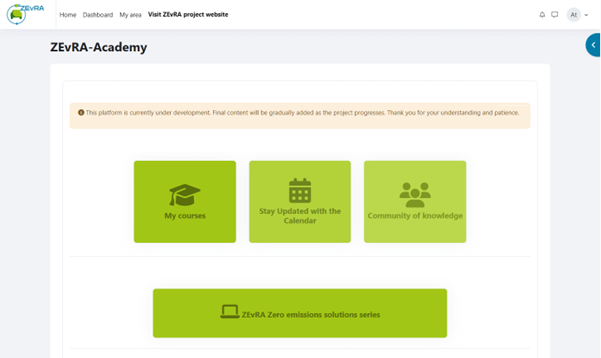
We are happy to share the ZEvRA training platform with our entire community!
Access to https://academy.zevraproject.eu/
This dedicated hub is designed for knowledge exchange and professional growth, with a range of courses and resources developed by the ZEvRA project team. We’re committed to making the platform even better, so you can expect regular updates and fresh content as the project evolves.
Our first three courses are now live, packed with practical information and skills tailored for the ZEvRA community. When you complete a course, you’ll receive an official certificate, plus you can get support from our AI assistant tutor in each course, ready to help you get the most out of your learning experience. You will also find supplementary materials from previous sustainability initiatives to further expand your knowledge.
Stay tuned for new content and features that will keep the platform dynamic and valuable for everyone. Join our growing learning community and make the most of everything ZEvRA has to offer!

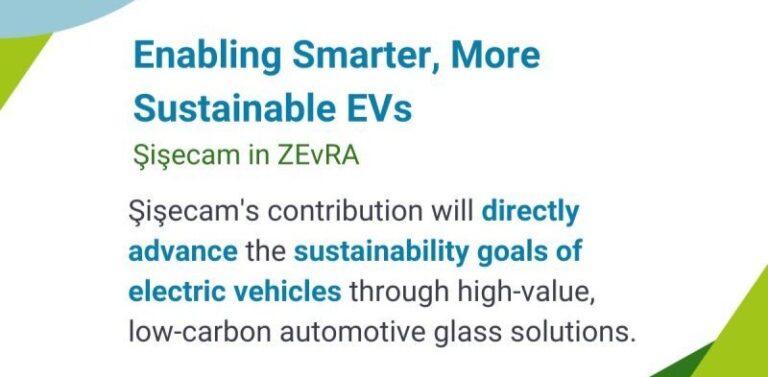
Şişecam Develops Innovative Solar Roof Glass for the ZEvRA Circular Vehicle Prototype
Şişecam is contributing to the advancement of circular electric mobility through the development of an innovative solar roof glass solution within the ZEvRA project. As
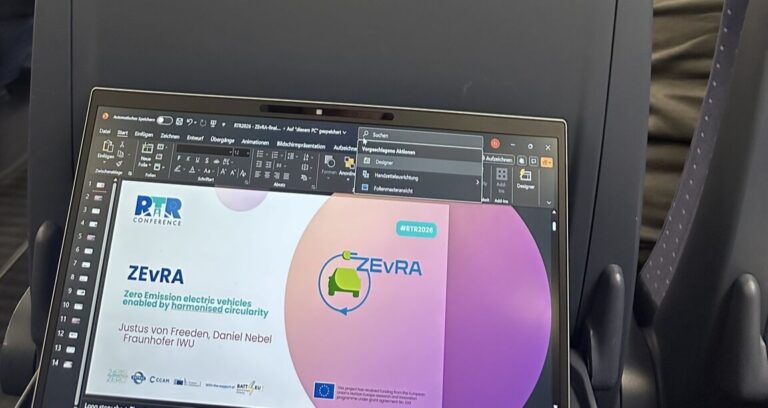
ZEvRA at the RTR conference in Brussels
The RTR conference took place in Brussels from 10 to 12 February, and ZEvRA was there! On Wednesday, Daniel Nebel and Justus von Freeden represented
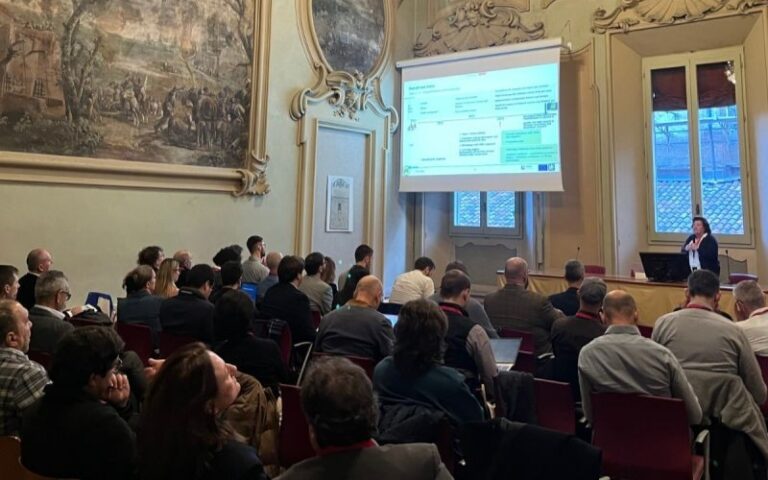
Fifth consortium meeting in Bologna
This week the ZEvRA consortium came together for our 5th consortium meeting, hosted by the University of Bologna 🇮🇹 (Alma Mater Studiorum – Università di
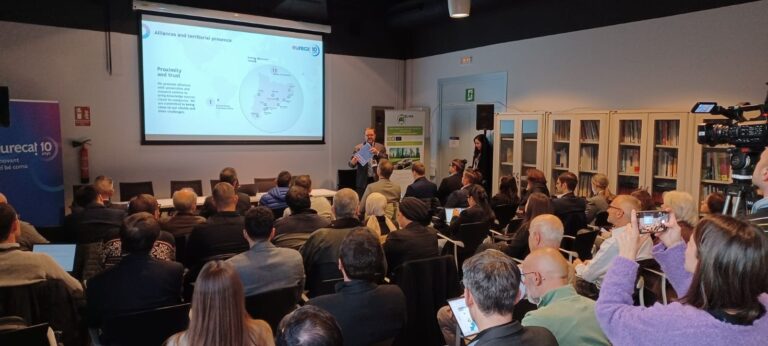
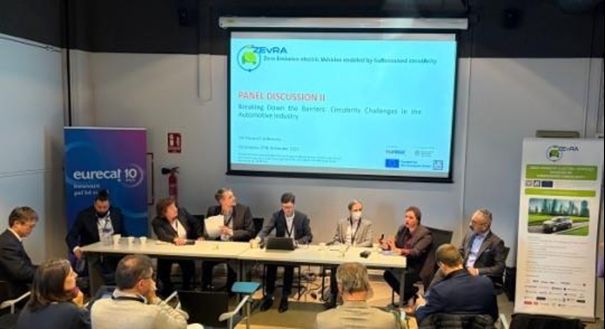
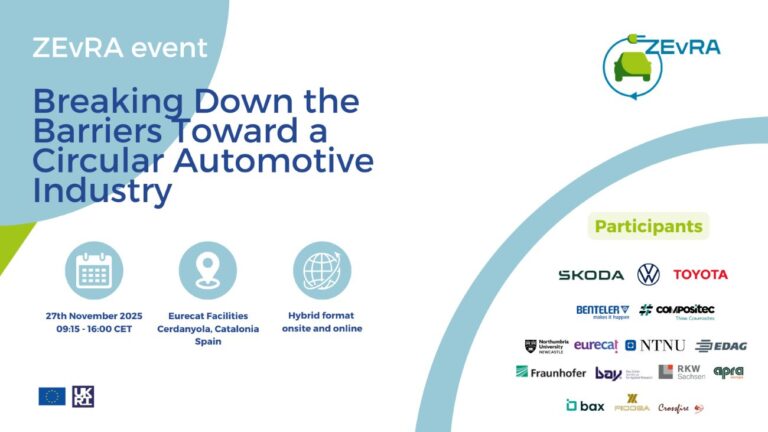
Breaking Down the Barriers Toward a Circular Automotive Industry
Key Insights from the 1st ZEvRA Annual Conference On 27 November 2025, the ZEvRA (Zero-Emission Vehicles enabled by Harmonised Circularity) project successfully held its 1st
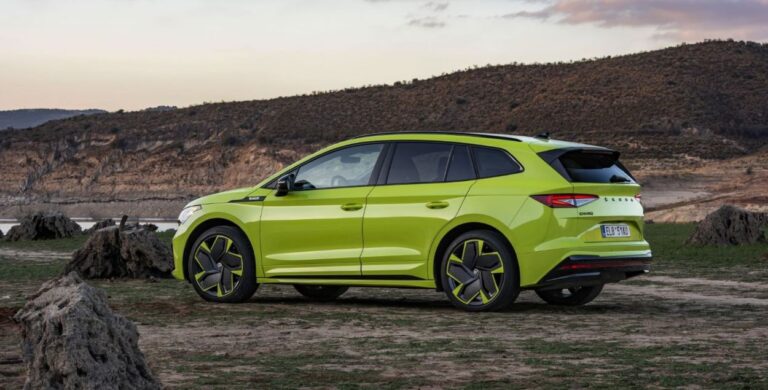
Welcome to 2026
We welcome 2026 with a spotlight on ZEvRA partner Northumbria University and their role within the project. Engy Ghoniem from Northumbria University explains how they
Our newsletter is here!
We are excited to announce that we will be sending out our newsletter regularly from December onwards.So if you want to stay up to date