Deadline extended
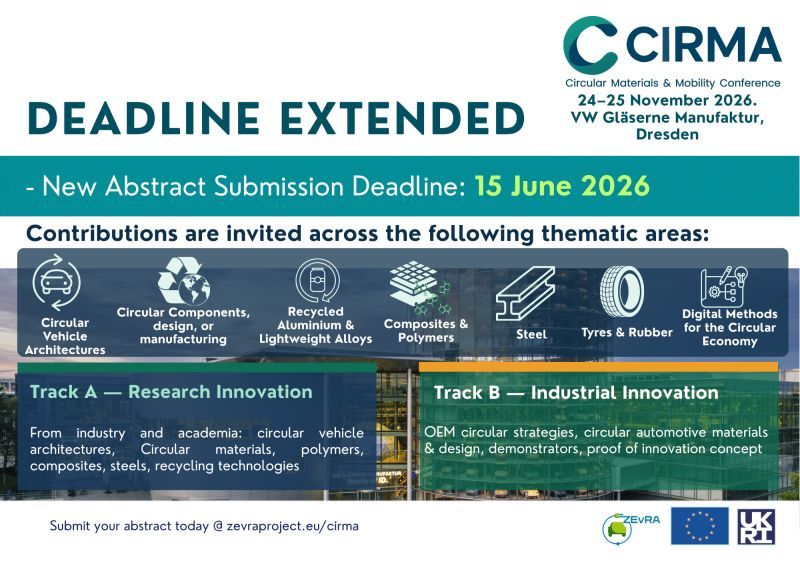
To allow our community more time to finalise submissions, the abstract deadline for the CIRMA 2026 Conference has been extended to 15 June 2026. The CIRMA event will take place on 24–25 November 2026 at the VW Gläserne Manufaktur in Dresden. This edition focuses closely on practical implementation, project results, and scalable solutions across the […]
The ZEvRA Zero emissions solutions series has started: ‘The circular electric vehicle: designing today for the mobility of the future’
On April 29, 2026, the ZEvRA project launched its Zero-Emission Solutions Series with the online webinar “The Circular EV: Designing Today for Tomorrow’s Mobility,” presented by M. Violeta Vargas-P. The session addressed how electricvehicles can be designed with their entire life cycle in mind, combining life cycle thinking with a methodology developed and digitally protected […]
CIRMA 2026: Call for Abstracts Now Open
The CIRMA 2026 event focuses on implementation-ready circular materials and mobility solutions, moving beyond conceptual sustainability discussions to connect academic research with OEM and supplier strategies across the automotive value chain. The conference agenda combines: Key themes include: CIRMA 2026 also provides visibility for: This is an opportunity for researchers, innovators, and industry leaders to […]
Our third newsletter, focusing on ‘Materials at the Heart of Circular Mobility’, has been sent out!
Moving from Discussion to Real Action: ZEvRA Newsletter #3 “Recycling and circularity have become common buzzwords… It is therefore time to move from discussion to real action.” — Daniel Nebel, Project Coordinator, Fraunhofer IWU. The latest edition of the ZEvRA newsletter is now live, marking a significant milestone in the transition toward circular automotive manufacturing. […]
ZEvRA: The future of the car is circular
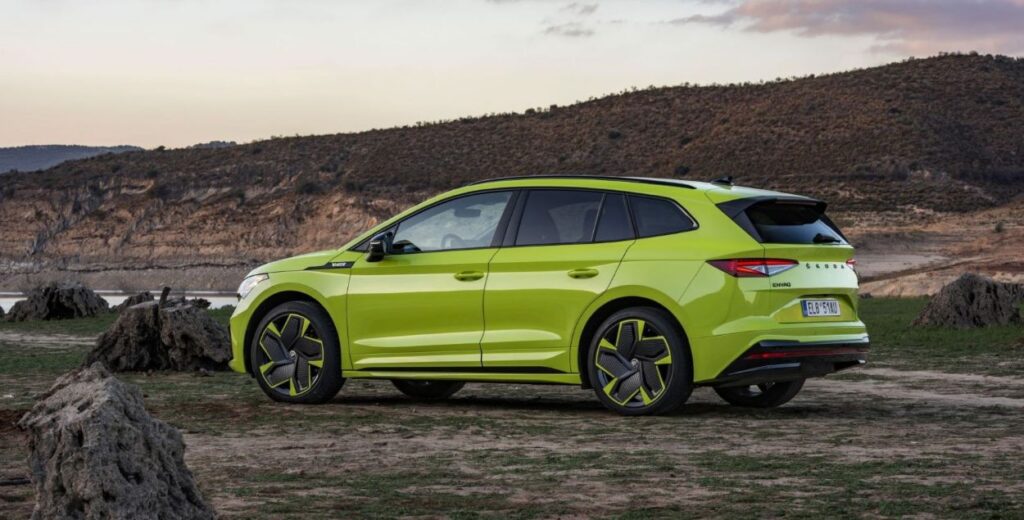
The ZEvRA exploitation task is progressing strongly toward the 100% circular car concept. Our innovation pipeline has matured from an initial 15 results to over 35 cutting-edge technologies and methodologies. Under the strategic exploitation leadership of Bax Innovation, and in collaboration with the whole consortium, we have identified 5 Prioritised Key Exploitable Results (KERs). These […]
ZEvRA Commits to Gender Inclusion in Electric Vehicle Sector
Celebrating Progress & Building the Future: Gender Inclusion in ZEVRA. Following International Women’s Day last Sunday, the ZEvRA Project is proud to reaffirm its commitment to fostering an inclusive research environment in the electricvehicle sector. Our recent internal assessment highlights the critical role of gender balance in driving scientific innovation and technological excellence. Current Success […]
Take part in the new online course ‘Circular Economy: From Basics to Practice’.
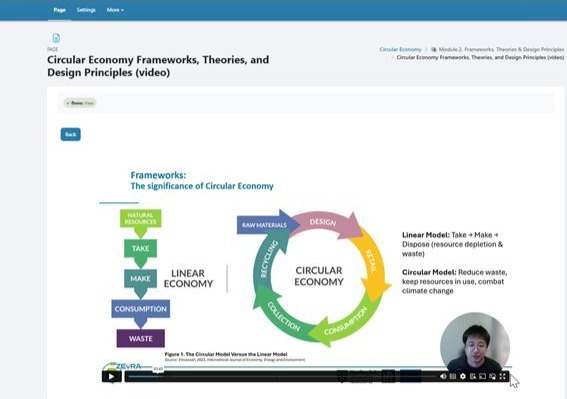
How can the Circular economy support the transition towards Zero Emission Urban & Rural Areas, in line with the ZEVRA project vision? This short, action-oriented course offers a practical introduction to circulareconomy principles and their real-world application. You will explore the differences between linear and circular models through real case studies from different sectors, and learn how […]
Şişecam Develops Innovative Solar Roof Glass for the ZEvRA Circular Vehicle Prototype
Şişecam is contributing to the advancement of circular electric mobility through the development of an innovative solar roof glass solution within the ZEvRA project. As one of 28 partners in the “Zero Emission Electric Vehicles Enabled by Harmonized Circularity” initiative, Şişecam is designing and manufacturing a specialized photovoltaic roof glass for the project’s circular vehicle […]
Welcome to 2026
We welcome 2026 with a spotlight on ZEvRA partner Northumbria University and their role within the project. Engy Ghoniem from Northumbria University explains how they play a central role in transforming the project’s technical results into real social and industrial impact, bridging advanced research with circulareconomy practice. Within ZEvRA, Northumbria University contributes across three key […]
Our newsletter is here!
We are excited to announce that we will be sending out our newsletter regularly from December onwards.So if you want to stay up to date with the latest developments in the ZEvRA project, sign up here.