Key Insights from the 1st ZEvRA Annual Conference
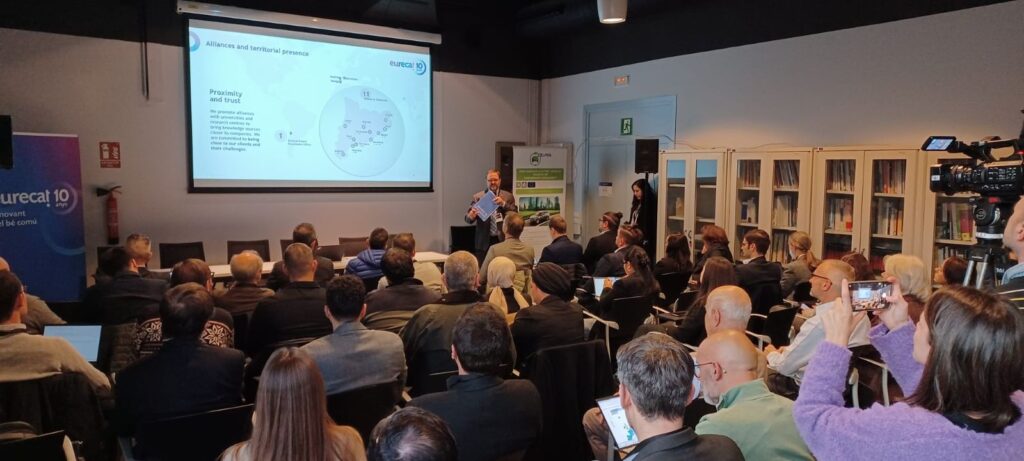
On 27 November 2025, the ZEvRA (Zero-Emission Vehicles enabled by Harmonised Circularity) project successfully held its 1st Annual Conference, “Breaking Down the Barriers Toward a Circular Automotive Industry,” at EURECAT facilities in Cerdanyola, Catalonia (Spain), in a hybrid format combining onsite and online participation. The conference brought together automotive OEMs, Tier-1 suppliers, research and technology organisations, universities, and circular-economy experts to exchange knowledge and address the practical, technical, and organisational challenges of implementing circularity across the electric-vehicle (EV) value chain.
The conference attracted a total of 98 participants, attending both in-person and online, with the majority representing organisations outside the ZEvRA consortium.
The morning programme opened with a strategic keynote by Dr Thomas Hipke (Fraunhofer IWU), who discussed how circularity can act as a core engine for Europe’s zero-emission mobility transition. The keynote highlighted the increasing alignment between circular automotive strategies and European policy frameworks such as the European Green Deal and the EU Circular Economy Action Plan, which emphasise resource efficiency, value retention, and industrial resilience.
This was followed by an OEM-focused keynote from Matthias Klaus Reichelt (ŠKODA), who provided an industry perspective on zero-emission vehicle readiness. The presentation addressed both progress and constraints faced by manufacturers, including material availability, supply-chain complexity, and the need to integrate circularity principles at the earliest design stages.
These opening sessions set the tone for the day, reinforcing that circularity is not only an environmental objective but also a strategic enabler for competitiveness and long-term sustainability.
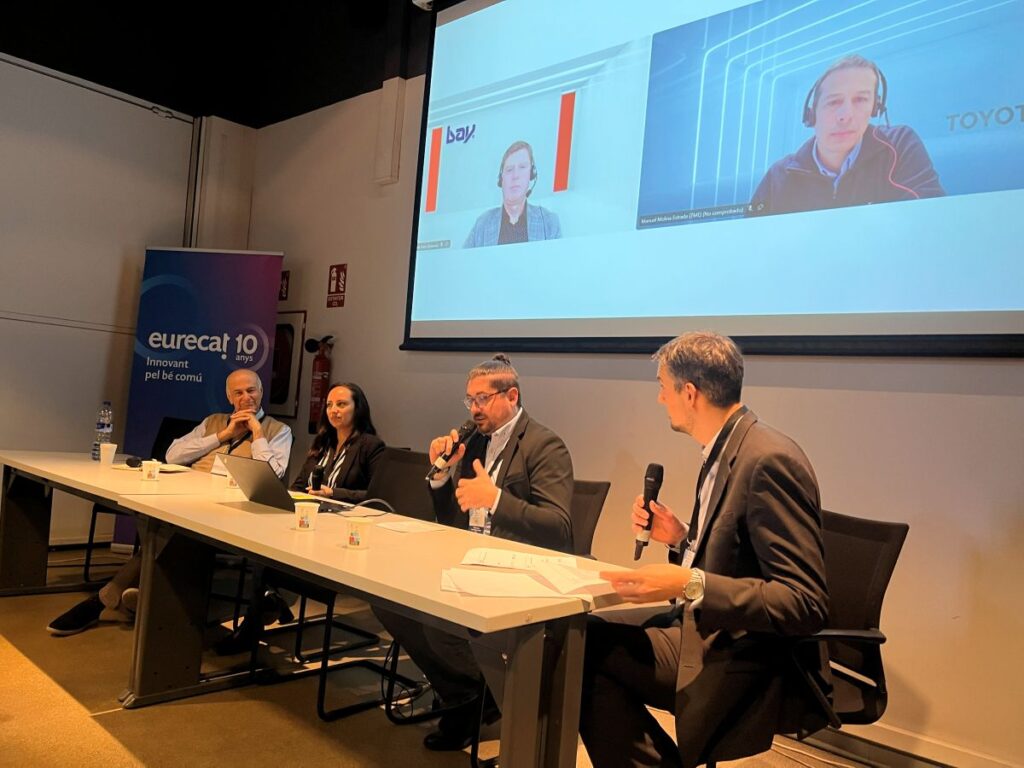
A dedicated panel session explored the application of the 9R framework in circular EV design. Moderated by Dr Stefan Caba (EDAG), the panel brought together experts from across the value chain, including Dr Violeta Vargas (EURECAT), Chrabák Péter (Bay Zoltán Nonprofit Ltd.), Gianluigi Creonti (Crossfire Srl), Manuel Molina (TOYOTA), and Alberto Gómez (FICOSA). The discussion highlighted real-world barriers to implementing higher-value circular strategies—such as reuse, refurbishment, and remanufacturing—while also showcasing emerging solutions in materials, design methodologies, and industrial collaboration. Panel members agreed that moving beyond recycling toward value-retention strategies is essential to achieve meaningful environmental benefits.
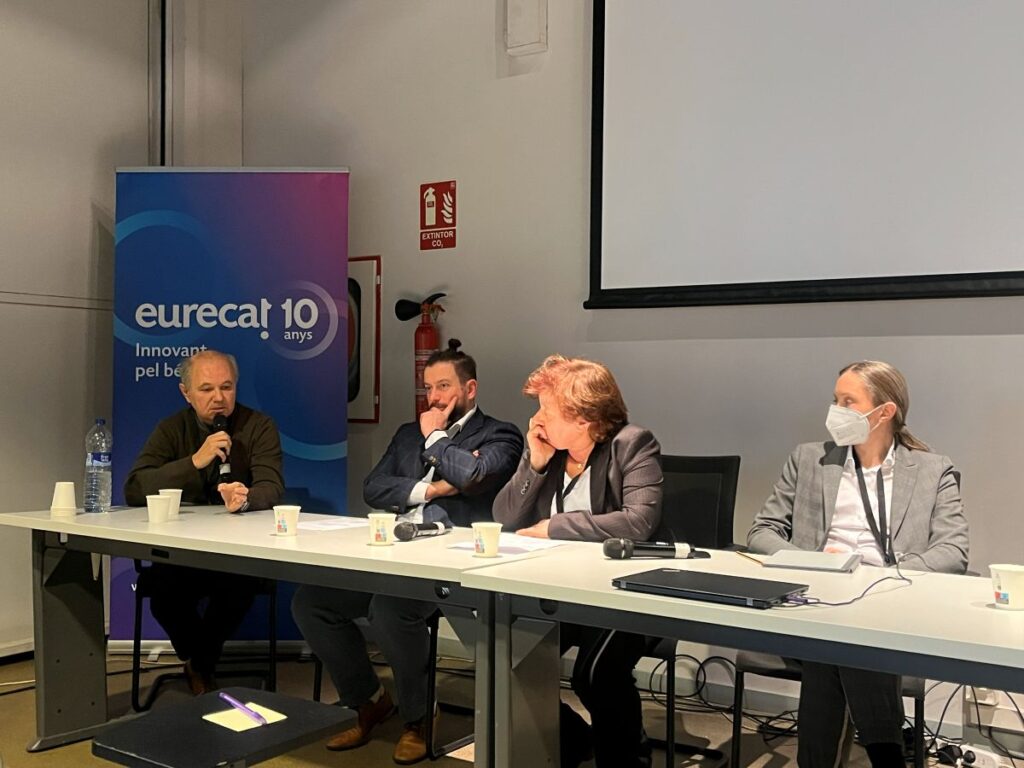
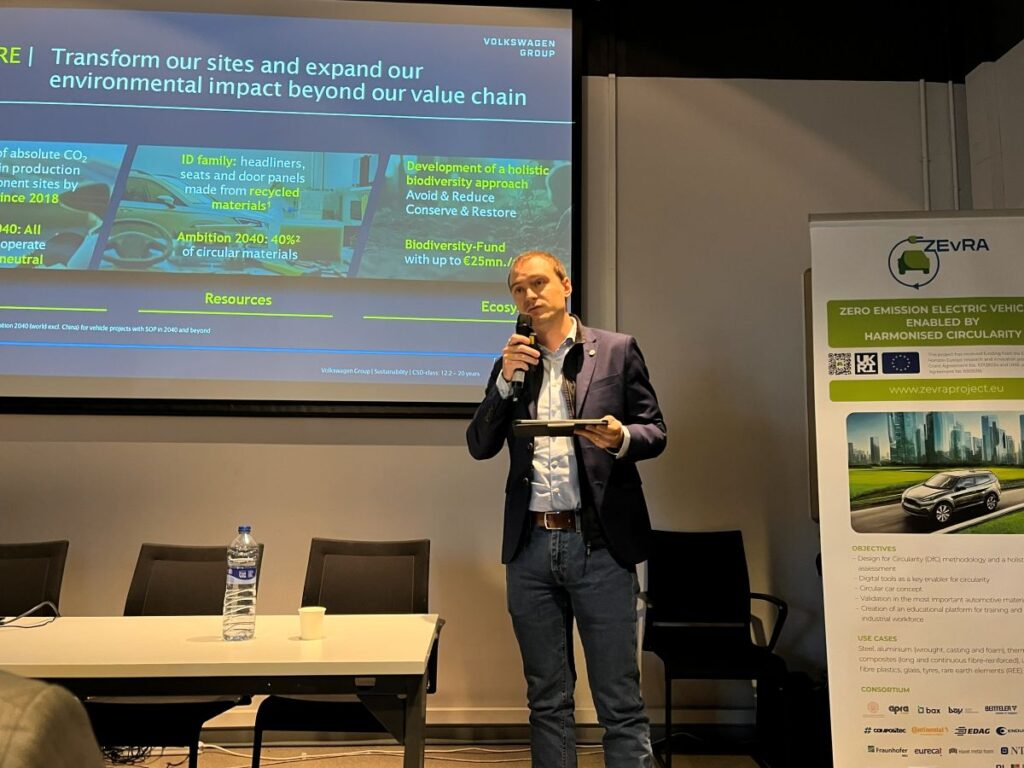
A second panel, moderated by Dr Engy Ghoniem (UNN), focused on broader systemic and organisational challenges affecting circular automotive implementation. The panellists included Dr Katharina Schopes and Tony Schuetze (RKW Sachsen), Kirsten Lange (APRA Europe), Dr Davar Hemyari (Benteler / NTNU), Dr Stefan Caba (EDAG), and Dennis Lauterbach (Volkswagen). The discussion emphasised the importance of cross-sector coordination, harmonised assessment metrics, and early collaboration between OEMs, suppliers, and recyclers. Speakers also highlighted regulatory uncertainty and data availability as key barriers that must be addressed through joint European initiatives such as ZEvRA.
An interactive workshop titled “How to Assess Circularity Across the EV Value Chain” was delivered by Violeta Vargas and David Sánchez (EURECAT). The session featured a live demonstration of circularity assessment approaches, followed by group discussions and participant feedback. In parallel, Dr Christian Hannemann (Fraunhofer IWU) gave an outstanding lecture on the use of recycled aluminium in the automotive industry.
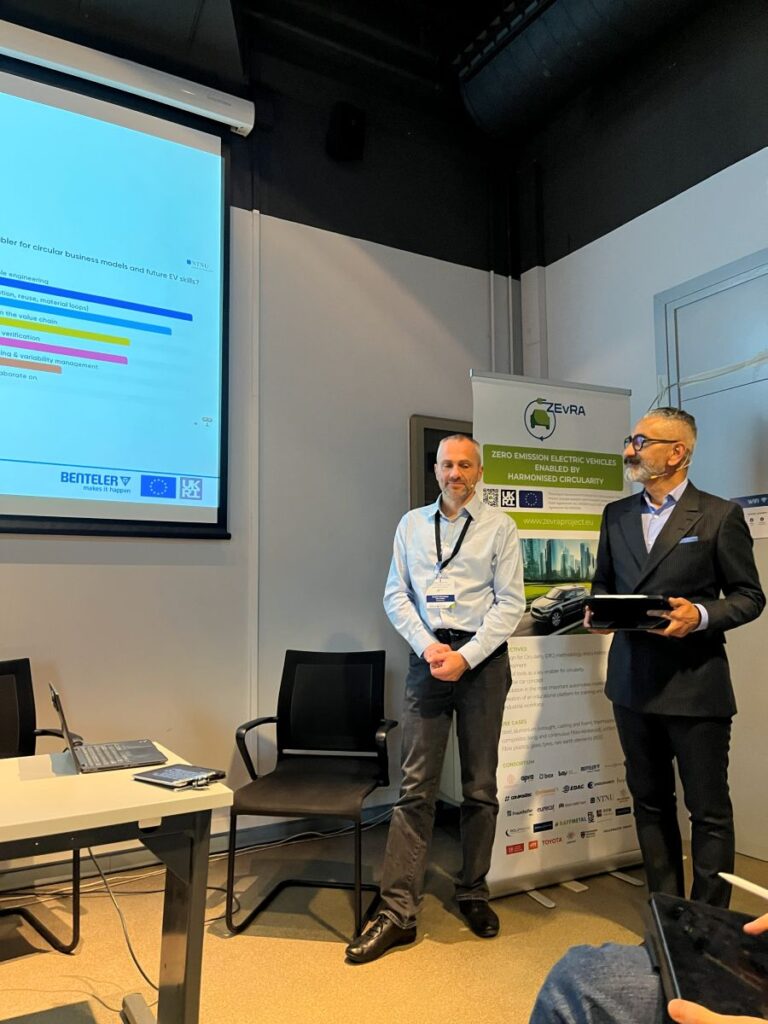
The afternoon programme continued with a session on circular case studies and skills for the future EV workforce, moderated by Dr Christian Hannemann (Fraunhofer IWU) and Dr Davar Hemyari (Benteler / NTNU). Contributions were provided by Dr Katharina Schopes and Tony Schuetze (RKW Sachsen), Kirsten Lange (APRA Europe), and Thierry Renault (ComposiTec). Speakers underlined that technical innovation must be complemented by education, training, and upskilling to ensure successful industrial adoption. The need for accessible learning resources and industry-academia collaboration strongly aligned with the ongoing development of the ZEvRA Academy.
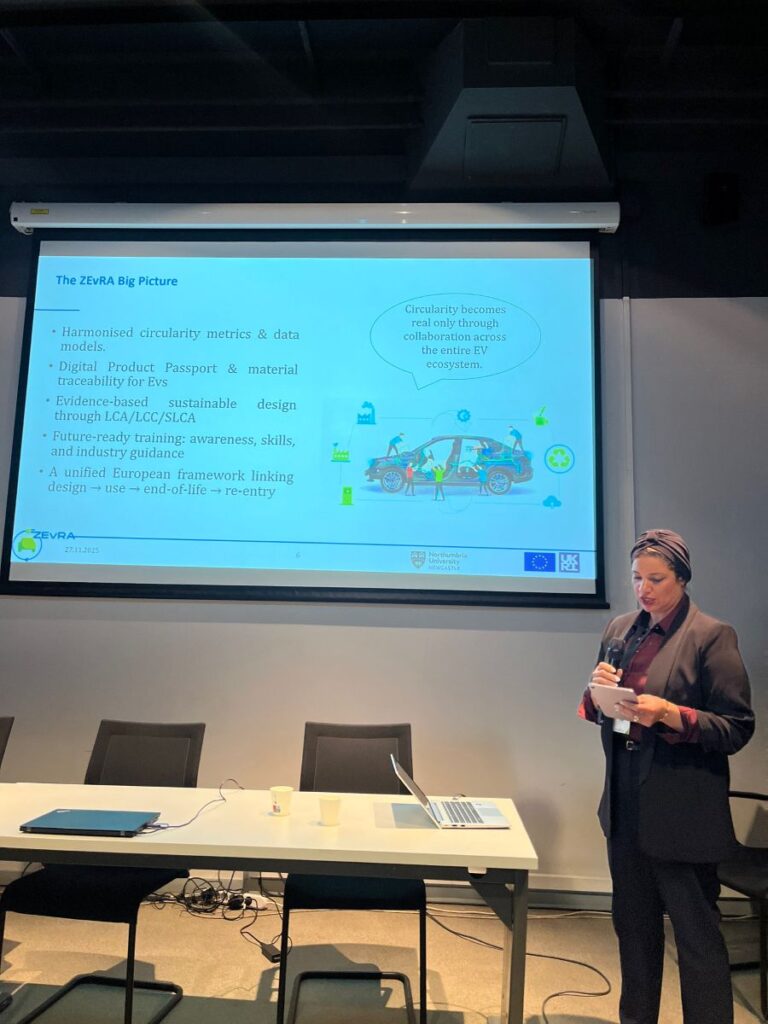
The conference concluded with closing remarks and a call to action by Dr Engy Ghoniem (Northumbria University), the awareness and acceptability WP leader within the ZEvRA project, emphasising the importance of maintaining momentum beyond the event. Participants were encouraged to remain engaged through ZEvRA’s upcoming activities, including training modules, stakeholder workshops, and future conferences.
The conference received strong engagement, with high participation from both in-person and virtual attendees, reflecting the value of the hybrid format in widening access and fostering inclusivity. Registrations represented a diverse mix of industry, research, and academic stakeholders, confirming strong interest in ZEvRA’s approach to advancing circularity across the zero-emission vehicle value chain. Insights and feedback gathered during the 1st ZEvRA Annual Conference will directly inform the refinement of ZEvRA tools, training materials, and dissemination strategies, supporting Europe’s transition toward a more circular, zero-emission automotive industry.